How To Get Pregnant In 2020 [Updated]





There is only a small window in which you can get pregnant each cycle, so you'll want to ensure you optimize your chances of getting pregnant by knowing the best times to have sex and how to prepare for pregnancy to increase your chances in 2020.
Get the timing right
You only ovulate once per cycle, timing is everything if you want to conceive. This is at the top of 'how to get pregnant' list for a reason - if you do everything else right and fail to get the timing right, you will not get pregnant. So let's make sure we can tick this one off.
Fertile window
As we learned in sex education classes, your mature egg emerges from the ovary, travels down a fallopian tube, and is then ready for fertilization. That egg can only live for 12 to 24 hours.
On the other hand sperm cells can survive within a woman's reproductive organs for as long as five days. However, many sperm die shortly after ejaculation because of the vaginal canal's highly acidic environment; other sperm will only last for one to two days, but some may last up to five days.
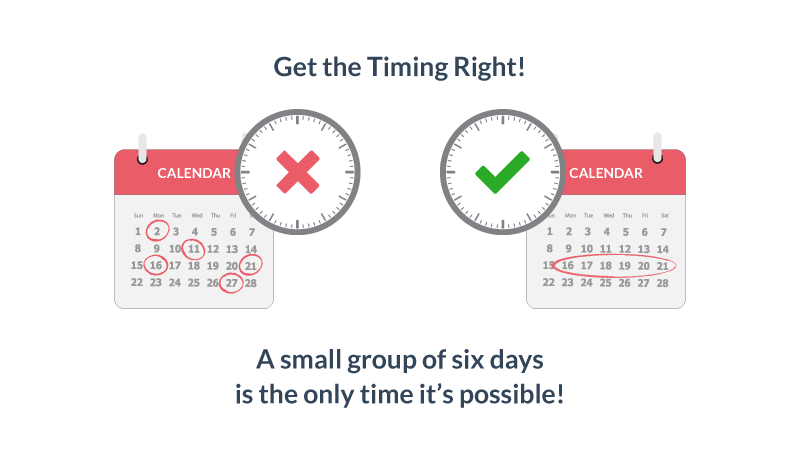
It's possible to get pregnant from intercourse during the five days prior to ovulation or early on ovulation day itself. This six-day period of time is known as your fertile window.
Best time to have sex
Keep in mind that a sperm is not capable of fertilizing an egg as soon as it is inside a woman's body. Rather, it must go through capacitation, which is a preparation process. The sperm changes physically and chemically, becoming more mobile and more capable of penetrating the egg. The uterus releases certain enzymes and proteins that help this transformation along.
Because capacitation can take 10 hours to complete, having sex late on ovulation day is usually ineffective. Therefore, you are more likely to conceive by having intercourse during those days leading up to ovulation.
The Journal of Reproductive Medicine has deemed the day prior to ovulation as the best time for getting pregnant. However, other researchers have concluded that two days before ovulating offers the same chances of conception as the day before. In fact, some experts believe that sex 48 hours prior to ovulation is preferable to sex 24 hours ahead of time.
Know when you ovulate
Obviously, this knowledge is not all that helpful unless you can figure out precisely when you will ovulate.
If you want to determine when ovulation day is, you should first start to track your cycles so you can establish when your next period will occur. This is where Ovulation Calculator comes in handy.
An egg is usually released about 12 to 16 days before a period. The tricky part is that almost half of all women have somewhat irregular menstrual cycles. Thus, your fertile window will unlikely occur at the same time each cycle. Instead, it could vary by up to a week from one cycle to another.
Next, get to know the natural fertility signs your body provides each cycle. This is very important when you're trying to get pregnant.
There are many signs you can learn, see the full list by clicking the link below. Here are some examples:
- One side of your stomach may feel a little tender or maybe even a little painful, this is known an ovulation pain or middle pain.
- Your cervix goes through a pattern of changes each cycle and changes position and texture. See our guide to cervix and cervical mucus observations.
- Your cervix also produces cervical mucus that changes throughout your cycle. During the first few days after your cycle, it will normally be absent or dry. Then, it will slowly start to increase in volume and become sticky and then change to creamy. As ovulation approaches, you will begin to notice that your cervical mucus will increase and become slippery and stretchy (like the consistency of egg white). Egg white cervical mucus (EWCM) provides a safe environment for sperm and assists sperm to reach the egg. This provides a hospitable environment for sperm to reach the egg. Sometimes the water content of cervical mucus is so high that the egg white mucus is more like water.
- Your BBT (basal body temperature) rises after ovulation. You can track ovulation by charting your basal body temperature. Take your temperature first thing in the morning, every morning, and keep a log. It helps to keep the chart along with a digital thermometer on your nightstand so you do not forget. There will be a small spike in your basal body temperature once you have ovulated. The charting link above provides further instructions on how to do this.
- Learn how to identify all your natural fertility signs.
What if I have irregular periods?
Most women miss a period once in a while. Most of the time the underlying issue is due to a hormonal imbalance. Even if you usually have regular cycles, a shift in hormonal balance can will alter your cycle patterns.
What is an irregular period?
Each woman is different, and regular simply means a regular pattern for the same women. Some women may have a 21-35 day cycles, whilst others may only only have 4 cycles a year and others may have periods twice a month. Irregular means what is irregular to you.
What can cause irregular periods?
Here's a list of some of the many things that can be responsible: Poor nutrition, stress, sudden weight loss/gain, excessive exercise, caffeine, smoking, too much alcohol, drugs, medications, chemotherapy, PCOS (polycystic ovarian syndrome), fibroids, endometriosis, perimenopause.
The same methods apply
Even though your cycle may seem irregular, you will probably find that it still has a pattern of events. By tracking your periods and ovulation overtime, you may notice a pattern that will make it easier to predict periods and ovulation in future months.
Track ovulation with these methods
As mentioned above, you can learn your natural fertility signs to identify when you are about to ovulate. Even if your cycle is irregular, your body will provide clues as to when you're fertile.
You can also use an OPK (ovulation prediction test). An OPK looks for a rise in luteinizing hormone (LH) in your urine. When your levels of luteinizing hormone spike, you will get a positive result on the test, and you will be in your most fertile time of your cycle.
Dr Tash explains how to use an OPK:
Is There Anything I Can Do To Try And Maintain A Regular Cycle?
The first thing to do is talk to your doctor, he or she will be able to carry out some tests to help rule out conditions.
Reducing stress and maintaining a healthy balanced diet can also provide a natural way to return your cycles to normal.
Take a prenatal vitamin
Did you know that women should start taking a prenatal vitamin at least three months before trying to conceive? Are you taking one? 6 reasons why you should be taking a prenatal vitamin.
Eat well
What food is best to eat while trying to conceive? Robin Elise Weiss, PhD, MPH, CLC, CD(DONA), LCCE, FACCE says:
One of the best pieces of advice that one can take while trying to get pregnant is to act pregnant. The reason for this is that there are so many things that happen in the first weeks of pregnancy, before you may even know that you are pregnant. By acting pregnant, you can be assured that you are putting your best foot forward at all times. So what does this mean in terms of your preconception diet?
What to avoid in your diet
We all know that you are what you eat. What you may not know is that some of the foods that you eat on an every day basis may not be the best foods to eat while pregnant or when trying to conceive. Some commonly eaten foods contain bacteria that may be quite safe when eaten by the general population, but can be very harmful to a growing fetes.
Some examples include:
- Deli meats. These are risky because of potential contamination with listeria. This can cross the placenta and cause a potentially life threatening contamination for the baby. If you are going to eat deli meat, it should be reheated until it is steaming hot.
- Raw meat. This is frequently found in sushi and in some specialty dishes. There are many reasons to avoid raw meats, namely toxoplasmosis and salmonella.
- Fish that is high in mercury. Typically this is larger fish like shark, tilefish, swordfish and king mackerel. While canned tuna is lower in mercury, it should be consumed in moderation. Mercury can cause developmental and mental delays in babies.
- Anything non-pasteurised. This includes cheese, juice, and other dairy products. Pasteurization is a safety measure to prevent contamination of food. Avoiding soft cheese and non-pasteurized items can help you avoid listeria.
What to eat while trying to conceive
Now that we have some of the "don'ts" out of the way, we should talk about the nutrient-rich foods that you should eat while trying to conceive. When you are trying to get pregnant, your diet is extremely important, so consider adding:
- Foods high in folic acid. Even if you are taking a prenatal vitamin, eating foods that are high in folic acid can help prevent neural tube defects in your baby-to-be, particularly in the early weeks of pregnancy when the neural tube is closing, and you may not know you are pregnant. Some grains and cereals may be fortified with folic acid, but natural sources of folic acid include: lentils, beans, spinach, liver, and other dark leafy greens.
- Foods high in fiber. Fiber rich foods are great for the digestive tract. This can help ensure that your body is ridding itself of waste products naturally and comfortably. One of the earliest symptoms of pregnancy can be a sluggish digestive tract. Head that off with a diet that is filled with fiber. Fiber can be found in: raspberries, beans, lentils, sweet potatoes, oatmeal, artichokes, and basically all your fruits and vegetables.
- Protein. You will want to ensure that you are getting enough protein because protein is the building block of every cell in your body. Protein is found in every food, not just meats, although vegetarians need to ensure that they are getting foods from a variety of sources to ensure a healthy diet. Looking for protein? Think lean meats, nut butters, legumes, and the like.
- Eat a rainbow. The last piece of advice for your pre-pregnancy diet is to eat a rainbow of foods. Mixing and matching a colorful array of foods can help your body get the right mixture of vitamins and nutrients in order to increase your chances of conceiving and to sustain a healthy pregnancy.
Exercise
What Is The Recommended Amount Of Exercise While Trying To Conceive? Robin Elise Weiss, PhD, MPH, CLC, CD(DONA), LCCE, FACCE says:
The best advice a person can give you before trying to get pregnant is to have the healthiest body that you can have to welcome a pregnancy. You have to look to the fact that your baby will grow inside your body. A body that is healthy and fit will make not only a safer home for your baby, but will also result in a much more comfortable pregnancy.
Exercising while trying to conceive
The good news is that if you have already been exercising, there is no need to make any drastic changes to your schedule. Continuing to exercise is best for your body and your future pregnancy. It can also help you in trying to conceive.
How much exercise?
If you have not been physically fit before trying to conceive, now is a great time to get into the habit of exercising. Anything you do above your current baseline is positive. So if saying the word exercise causes you to break out in hives, think of it more as movement, such as walking, yoga, or swimming. In general you should be exercising 30 minutes a day, most, if not all days of the week. This recommendation is from the American College of Obstetricians and Gynecologists (ACOG), but is also supported by many other health organizations. Remember, this does not have to be in one session; it can be broken down into multiple sessions. It is also to be considered a minimum, not a maximum.
What are the benefits of exercise?
Adding a walk to your day or even two smaller walks can be beneficial at increasing your heart health. This can be important because in pregnancy, your blood volume quickly expands, meaning that your heart has to work extra hard to pump the extra blood. Having a healthy heart makes your pregnancy much more comfortable. Women who regularly exercise also tend to have more regular periods. When you have more regular cycles, it can shorten the amount of time that it takes to conceive. This is because you can more easily track your cycles and predict when you will ovulate.
Did you know that women who work out in pregnancy also report fewer aches and pains? The body undergoes a lot of changes in pregnancy. Stiffness and inability to move as quickly is something that can be common, but women who are up and moving in the exercise field report fewer instances of pain related to their pregnancy than the non-exercising counter parts.
Is there such thing as too much exercise?
There are a few things that you may want to consider as you exercise in the pre-pregnancy phase. If you are overdoing it, if your runs are exhausting you, if your weights are wearing you down, if your period has become erratic or non-existent, you may want to pull back. These can be signs that you are pushing too hard, or at least hard enough to alter your menstrual cycle and give you potential difficulties in conceiving. If you have any concerns or questions, talk to your doctor or midwife.
Get your partner involved
Yes, getting your partner involved can help you get pregnant. Of course, your partner is involved in your efforts to conceive. However, in many cases, but not all, the woman knows a great deal more about how the process works. This could create a lot of confusion and possibly even unrealistic expectations that could easily be avoided. Communicating with your partner is therefore key in ensuring you are on the same page in your efforts to conceive.
Does your partner know that you have a fertile window during each cycle, and that you cannot get pregnant outside of that window? It's a good idea to have a conversation about the biology behind making a baby.
Timing sex for the best result
Now that you both know about your fertile window and how to track it, you can track it together. Agreeing on a method together and tracking your fertile window as a couple will mean you will both be ready and willing when the time comes.
There is also less chance of either of you getting too wrapped up in something else and letting your fertile window slide by causing further delays to your efforts to conceive. Involving your partner means that you will have one another to remind you to slow down and make time for sex.
Supporting each other through the process
It is perfectly normal for a healthy, fertile couple to take three to six months to conceive, but that does not make the process easy. It can often be harder on the woman because she is the one taking the pregnancy tests; it is her body. Unless you involve your partner, he may not realize the emotional toll that the process takes on you, and so he cannot offer support in any form. Not only does this put you at a disadvantage, but it can also put a strain on your relationship.
Sex and how to get pregnant sooner
Okay, so it's obvious that you need to have sex, but here we will cover how to fit sex into your life during your most fertile days and how both the female and male orgasm can help increase your chances.
Your fertile window may not happen at the most opportune time in your schedule. This is when you find yourself saying all kinds of un-sexy things, like, "Okay, let's get this over with..." Sometimes, you may struggle to even find the time to "get it over with". The trouble is, if you miss your short window of opportunity that's another cycle you will have to wait.
It is surprisingly easy to let time pass you by, which is not ideal when you are trying to conceive. The more time that passes, the less fertile we become (fertility declines with age) so it's important to fit sex in when the chances of conceiving are greatest.
5 tips for fitting sex into your life during ovulation
- Change Your Mindset - Couples who have been trying to conceive for a few months are more likely to consider sex during ovulation as a chore because their confidence in conception starts to dwindle. It is very common for couples to take several months to conceive, so consider all intercourse during ovulation as the moment your child will be conceived.
- Practice A Little Restraint - If sex does begin feeling like a chore, make it more of an event. Avoid having sex for a week before your most fertile days, and you will be much more likely to look forward to it and prioritise it. However, waiting a week or more between ejaculations is not recommended (more on this below).
- Plan Ahead - Since you are now tracking your cycles, fertile window and ovulation, you should be able to estimate when you will ovulate. Plan to clear your schedules as much as possible within this time.
- Anticipate Interruptions - If you have children already, this tip is key. While you are planning to make time to have sex, don't forget your children may burst in at any time, so plan for when they are out (at school / with grandparents etc.) or asleep.
- Keep It Fun - Most couples try to fit in as much sex as they can during the fertile window. That helps with conception odds, but it can also make the act feel somewhat rote. Buy a book of kama sutra, play a sex game or plan to try new positions. Talking about the new things you will try can also help to put you in the mood.
Why it's important for women to orgasm when TTC
When trying to conceive, it's easy to focus on the male orgasm. After all, without the male orgasm, there would be no sperm to fertilize the egg. But let us not forget about the female orgasm. It is not as common as the male orgasm - only about 25% of women always climax during sex - but it is almost as important for conception.
History of the orgasm
It seems as though we have known for a long time that the female orgasm has something to do with conception, but it took a while for us to really figure out the connection. In the 19th century, they believed the purpose of the female orgasm was to keep a woman lying on her back longer, so gravity does not work against the sperm and it has a better chance of reaching the egg. Later, experts believed that the purpose of a woman's orgasm was to strengthen the couple's relationship, so they can grow closer together.
How it helps conception
When a woman orgasms, the vagina's pH becomes elevated and ion concentrations change. These things combined with the contractions of the climax help to pull sperm into the cervix. The journey of the sperm is a long and treacherous one, so anything that can help it along will drastically increase the chances of conception. So, feel free to enjoy the baby-making process. The more you both enjoy it, the more likely it will be to end in pregnancy.
Men who are really excited can help conception
Your partner may ejaculate every time you have sex, but could the experience be better? The more a man ejaculates, the better it feels, and the more sperm he may release. Men who are fully stimulated during intercourse may ejaculate up to 50% more than average.
Many things can impact the amount of ejaculate that is released during an orgasm, but only two things are within your immediate control.
If your partner abstains from sex or masturbation for a long period, he will ejaculate more when you finally do have intercourse. This is not recommended for reasons we have already covered.
The other, recommended course of increasing male ejaculate is to have more pleasurable sex. A quickie may result in pregnancy, but a long sensual experience is more likely to result in more sperm available to make the long journey to the egg.
How to increase pleasure time
Right before a man reaches orgasm, he will feel intensely pleasurable sensations that are like mini orgasms. This can go on for some time without reaching the point of no return, but it does take some effort to get to that point. As the woman, you can help by increasing foreplay time. He may think this is for your pleasure, but it will also help his.
Another way to increase time before an orgasm is for your partner to practice "holding out". While masturbating, if the man stops before he reaches climax and then starts again, he can train himself to last longer when the feeling of orgasm approaches.
How much sex is too much?
For women, having sex everyday is not really an issue, as long as it is enjoyable. However, some women can contract a urinary tract infection known as "honeymoon cystitis", after having lots of sex in a short period.
What can happen when a man has sex too often?
During a woman's fertile window, some experts recommend that the man only ejaculate every other day. Anything more than this could be considered too much sex, and it can diminish the quantity of sperm that a man will ejaculate during intercourse. This can have obvious implications on a couple that is trying to conceive.
Having sex too often may not give the body enough time to replenish sperm stores. For a healthy, fertile male, having sex once a day may be okay - or it may be too often. This is why experts recommend waiting a day or two in between. This includes ejaculation from masturbation until intercourse. And if there is a known issue of male factor infertility or low sperm count, waiting becomes even more important.
What can happen if a man does not have enough sex?
Just as having too much sex can be a problem for conception, not having enough sex can also be detrimental. Just like any living thing, sperm have a life cycle. When that cycle is drawing to an end, the sperm will become impaired, but the worst part about aging sperm is that they secrete a substance that will also affect the younger, healthier sperm. So, waiting a week or more between ejaculations is not recommended when trying to conceive. Again, experts recommend having sex every two to three days during a woman's fertile window.
Reduce Stress
Stress can affect your overall health, but it can also affect your chances of getting pregnant.
When stressed, you may be more likely to binge drink and/or smoke, which are both fertility-decreasing activities.
Chronic stress may also have a deeper impact on your chances of conceiving by altering signals to the hypothalamus, the part of the brain that regulates hormones associated with ovulation. If you are constantly stressed out, you may not ovulate as frequently, which could drastically decrease your odds of getting pregnant.
If you are feeling stressed and having trouble conceiving, it can be difficult to identify which is the cause and which is the result. However, you may take some solace in knowing that most fertility issues can be linked to a specific medical issue that can be treated, not stress.
So although stressing about potential infertility may not be helping your chances of conceiving, it probably is not the root cause.
How to reduce stress while trying to conceive
Unless you find yourself feeling anxious and stressed more often than not, stress is probably not going to have a major impact on fertility. The body adjusts well to daily stresses, so these things may be a pain but they probably are not causing infertility
The stress you should look out for comes on strong and suddenly, and is overwhelming. These major stressors (such as a loss of a job or family member) can throw your cycle out of whack and may make it difficult to conceive.
The good news is that severe effects such as these do not tend to last a long time. Here are some things you can do to reduce stress:
- Get eight hours of sleep each day
- Exercise - even yoga or walking can help alleviate stress symptoms
- Adopting meditation techniques
- Start journaling
Benefits of trying to conceive with other wannabe moms
The decision to involve other people in your journey is a personal one. However, there are benefits to going through this process with the support of others who are also trying to get pregnant.
There can be many emotions that come along with the process of trying to conceive, and no one will understand like another wannabe mom who is going through the same thing.
Emotions are running high, and this is a great opportunity to form strong friendships with people who understand your journey like no one else.
Support through the ups and downs
Whether it is a friend who happens to be at the same stage in her life or an entire support group filled with wannabe moms, these women can help you through some of the toughest times.
Other wannabe moms may have some very helpful advice for you along your journey, from coping with disappointment to questions to ask your OB/GYN.
Introduce yourself to the Ovulation Calculator community.
When you do not get a positive pregnancy test, your new circle of friends will understand. They are not likely to look at you with pity in their eyes. Instead, they can hope and give you support because they also want the same thing you do.
Wannabe mom friends can also keep you busy during the two week wait
There is a lot about this process that some moms will not understand, however, no one understands the dreaded two week wait like a woman who has spent multiple cycles trying to conceive. It can be downright torture. The two week wait takes place between ovulation and the end of your cycle, and it ends when you either get your period or take a pregnancy test. It is a time filled with hope and anxiety, and it is probably the only time when two weeks can feel like two months.
Go for a preconception checkup
Most people would get their car checked over before going on a big road trip, so it makes sense that you would get your body checked over before trying to get pregnant. It's better to detect any issues and get treatment sooner rather than later.
Ideally, this should occur a few months before you start trying to conceive. In addition to receiving a gynecological exam, this checkup will help you determine what you will need to do, if anything, to be sure you are physically and emotionally ready for a baby.
What happens at the preconception checkup?
Your practitioner will ask you list of questions about your health and lifestyle. If you are visiting with a family doctor that you have seen for years, he or she may already know the answers to many of these questions.
These questions normally include:
- Your gynecological history, such as your cycle regularity
- Birth control history
- Whether you have ever had a sexually transmitted infection
- Previous pregnancies, including ectopic pregnancies, abortions and miscarriages
- Any pregnancy complications you have previously experienced, and if you have ever given birth to a baby who has had medical issues, such as a neural tube defect
All of these questions will help your doctor determine the best course of action to help you both take the proper precautions to ensure everything goes smoothly.
If you are not already taking a folic acid supplement, your doctor will likely advise you to start taking at least 400 micrograms each day. If you have had previous pregnancies that resulted in a baby born with spina bifida, a higher dose will be recommended.
As already mentioned, you should be taking a prenatal vitamin for at least three months before getting pregnant.
Certain diseases are especially risky during pregnancy, so your doctor will likely check your vaccination history to be sure you are immunized against Rubella, chicken pox, whooping cough, diphtheria and tetanus.
Where To Go For A Preconception Checkup
This can be a little confusing because of how doctors choose their specialties. Some OB/GYNs take patients in all stages of life, while others specialize in one or another. For example, your gynecologist may regularly deliver babies or he or she may specialize in reproductive medicine outside of pregnancy. Either way, at this point, you should see your gynecologist for a pre-conception checkup.
If possible, you may also want to see your primary care physician. Your primary care doctor can talk to you about your medical history and any concerns he or she may have for you during pregnancy, and he or she will probably conduct a full physical to ensure that you are healthy enough to carry a baby. Your gynecologist may cover some of the same topics, but they will also be able to conduct a pelvic exam, if you need one, and talk in greater detail about genetic testing and common pregnancy concerns that you may have.
Conclusion
Hopefully you're better informed about what you should be doing to get pregnant in 2020. As mentioned, there are only a few days each cycle that you're fertile, so make the most of them. Take our Fertility Knowledge Quiz to see how much you know about fertility. Good luck!